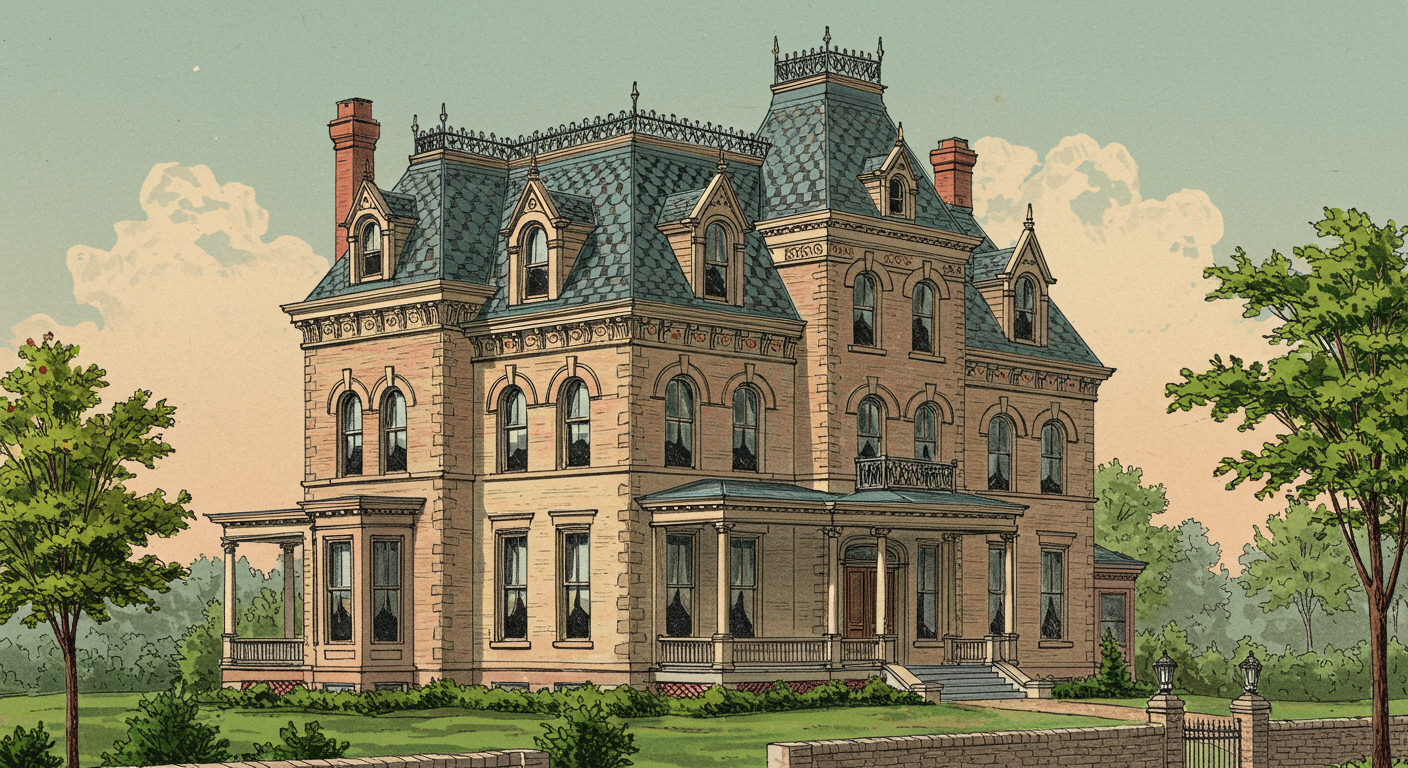
There is a small irony at the heart of the most imperial roof in nineteenth-century American architecture: it began its life as a French tax dodge. The roof in question is the mansard — the steep four-sided slope in patterned slate, capped by a flat upper deck and very often by a continuous wrought-iron cresting, set on every grand American mansion of the post-Civil-War decade and on every federal post office and customs house built under President Grant. It is the architectural signature of the Gilded Age in America, the silhouette one finds on the most monumental buildings of the 1870s in any American city that mattered. It is also, in origin, a Parisian property-tax loophole, refined by a seventeenth-century French architect named François Mansart, and the gap between origin and adoption is the most thoroughly American thing about it. The Americans took the silhouette, kept none of the history, and flew it from the cornice line of every important building they put up in the years between Appomattox and the Panic of 1873.
This is the Second Empire, and the irony is the joke. What follows is the fifth in a series that has been, in a quiet way, trying to read American houses for what they were trying to say. The Queen Anne (the first post) said the middle class has arrived and is making no apologies. The Greek Revival (the second) said we are the new Athens; please do not look too closely at how we are financed. The Gothic Revival (the third) said we are a Christian republic, and the right house for our family is a steep-roofed cottage among trees. The Italianate (the fourth) said we have read of Tuscany, and we should like to imagine ourselves on a hilltop above Florence. The Second Empire said something more direct than any of these, and more imperial: we are a great power now, and we should like to look like Paris. It was the architecture of the post-Civil-War American republic in the years when it had begun to suspect that it had become, in its own right, an empire.
The Misnomer
To make sense of the gap between origin and adoption, one needs both halves of the history: the French empire that gave the style its name, and the seventeenth-century tax loophole that gave the roof its form.
The “Second Empire” refers, exactly, to the reign of Napoleon III in France, between 1852 and 1870 — Louis-Napoléon Bonaparte, a nephew of the first Napoleon, who had been elected president of the Second Republic in 1848, dissolved that republic by coup three years later, and proclaimed himself Emperor in 1852. His most famous domestic project was the rebuilding of Paris under Baron Georges-Eugène Haussmann between 1853 and 1870 — the great boulevards driven through the medieval street grid, the uniform six-storey limestone building line, and the steep slate-tiled mansard roofs that crowned every Haussmannian block. The mansard roof, with its steep lower slope and its small flat or hipped top, became, in the 1860s, the most recognisable signature of imperial Paris — and what crossed the Atlantic, by way of a few Americans who had visited and a great many architectural journals that had not, was the silhouette of that roof translated into American materials and pitched at American buildings.
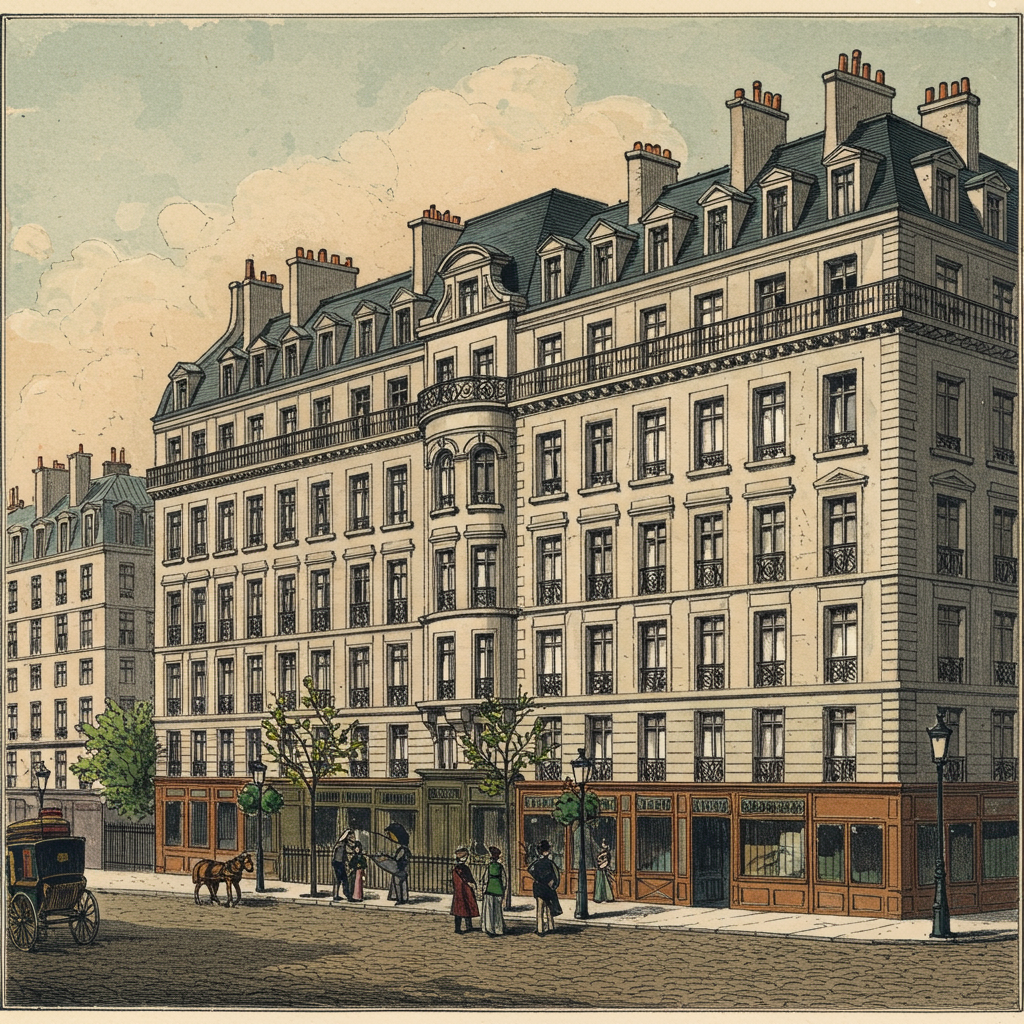
A Haussmann-era Paris boulevard block, roughly 1865 — six storeys of cream limestone, identical iron-railed balconies, a continuous mansard roof in slate. The Parisian source the American Second Empire was, at one ocean’s remove, attempting to translate.
The roof’s name, however, is older than the empire that adopted it. The form is named for François Mansart (1598-1666), the seventeenth-century French architect who popularised it under Louis XIV — though he did not invent it; the broken-pitched four-sided roof had been used in French and Flemish buildings for at least a century before he was born. What Mansart did, and what the name commemorates, was put it to a particular purpose: to dodge a tax. The Paris municipal property tax in his day was assessed by full-storey count, with attics not counted as full storeys provided their walls did not rise vertically from the wall plane below. Mansart’s design pitched the lower slope of the roof so steeply that the attic could in fact be lived in — full standing height, with rooms big enough to rent — while still passing the tax inspector’s eye as roof rather than storey. He did not, of course, advertise this, but the mansard became standard on Parisian townhouses precisely because it added a habitable storey at attic-rate tax. By the time Haussmann rebuilt Paris under Napoleon III, the practical origin of the form had been forgotten and the mansard had become simply the Parisian roof.
The Americans who adopted it in the 1860s and 1870s knew none of this. They adopted the silhouette because the silhouette was Parisian, Parisian was imperial, and the post-Civil-War American republic was looking for an imperial style. The roof’s seventeenth-century French tax-loophole origin was not part of the American story. What the Americans were buying was a fashion image, and the fashion was now — Haussmann’s boulevards, the imperial court, the gas-lit Paris of the 1860s — translated into the materials and the moral register of the United States.
One is obliged to concede that this is, in its way, a most thoroughly American thing to have done with a French tax dodge.
The Specimen
If one is to identify a Second Empire building — and they are, once one has begun looking, the ornament of every old American downtown’s grand block — the simplest exercise is, as before, to walk around a specimen and assemble the evidence.
Begin at the roof. This is, more than for any other style in this series, the entire identification. A Second Empire building carries a mansard roof: a steep four-sided pitched roof in which the lower slope is nearly vertical and the upper slope flat or only slightly hipped, so that the silhouette has the shape of an inverted soup-bowl rather than the gentle pitch of a hipped or gabled roof. The mansard rises directly from the cornice line of the body of the building, replacing what would have been an ordinary roof with a tall additional storey wrapped in slope. The lower slope is faced, almost without exception, in patterned slate — fish-scale, banded, lozenge-cut, sometimes in two or three slate colours — and the patterns themselves are part of the style. (The patterned slate was a slightly later technological move than the bracketed cornice; cheap mass-quarried slate from Vermont and Pennsylvania, shipped by railroad and cut by power saw, made decorative slate patterns affordable for the first time in the 1860s.)
The mansard’s lower slope is concave, convex, straight, or S-curved depending on the example. A straight mansard is the plainest; a concave mansard, where the lower slope curves inward toward the building, is the most theatrical; a convex mansard, curving outward like a bell, is the most assertive. Three different houses on the same block, one of each kind, will read as the same style to the eye but will declare three different attitudes.
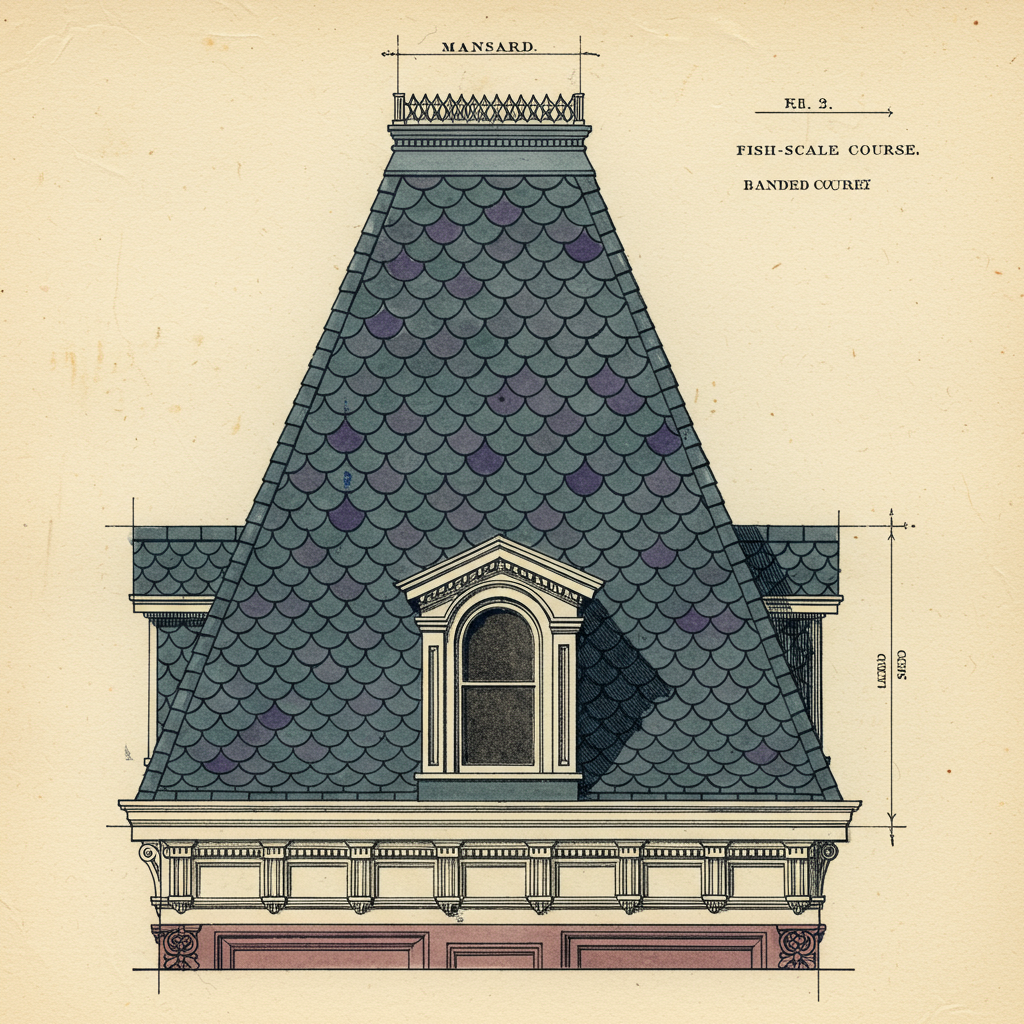
The mansard, faced in patterned slate — fish-scale courses banded with diamond-cut courses in a darker shade, the lower slope nearly vertical, the small upper deck almost flat. The Second Empire’s signature, and the entire identification: a roof of this profile is Second Empire to a strong probability, and a roof without it almost certainly is not.
Set into the lower slope of the mansard, on every face, sit dormer windows — vertical-walled boxes pierced through the slope, each with its own little roof, each carrying a window and often a small pediment cap and bracketed surround. The dormers are arranged in regular bays matching the windows below them, so the mansard reads as an additional storey of fenestration rather than as a passive roof. Each dormer is a small composition in itself — a tiny pedimented building set into the larger one — and on the most elaborate examples the dormer caps are alternated, segmental and triangular, in the manner of a Renaissance palazzo’s window pediments.
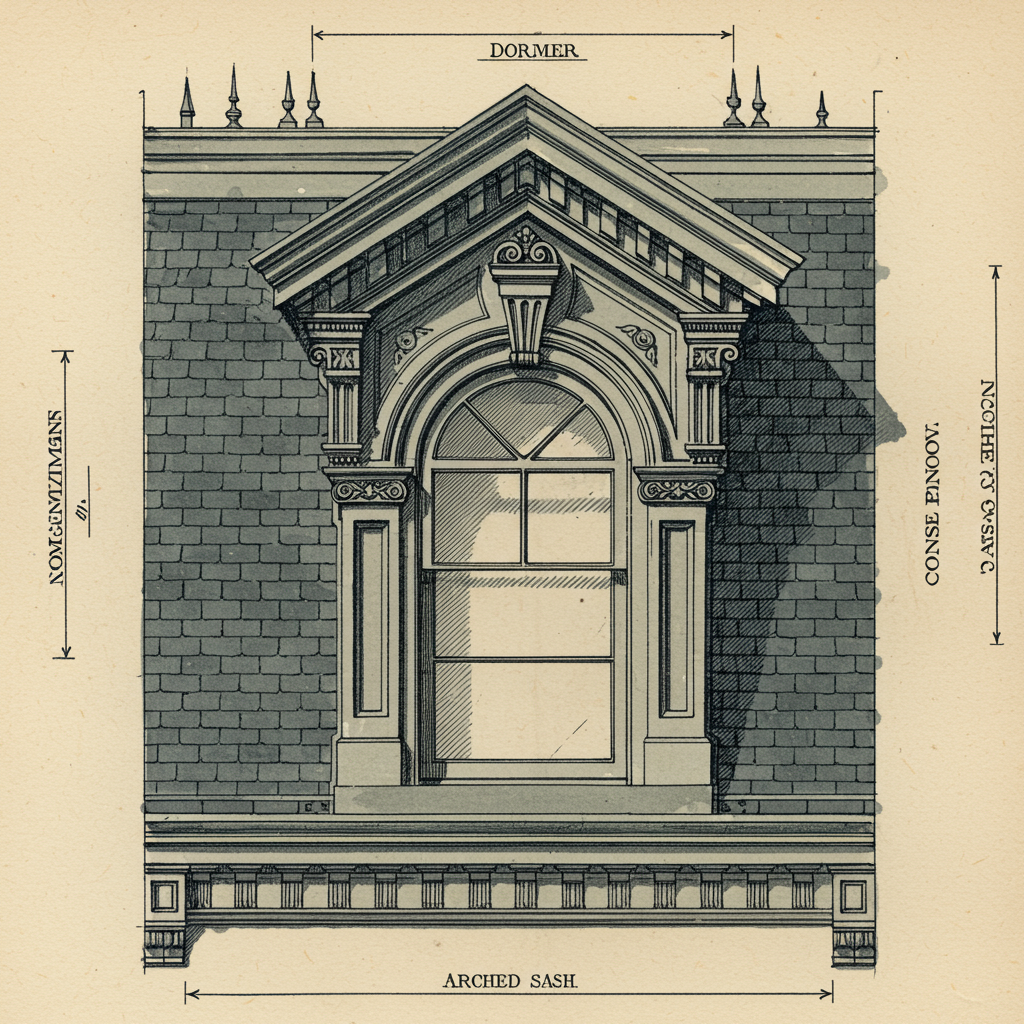
A dormer set into the lower slope of the mansard. Each dormer carries its own small roof, its own pediment cap, its own bracketed wooden surround — a tiny pedimented building in itself, repeated in regular bays around the mansard. The mansard reads, by virtue of the dormers, as an additional storey of fenestration rather than as a roof.
Look at the top of the roof. Crowning the flat or low-hipped upper deck of the mansard sits a cresting of decorative wrought iron — a continuous lacy ridge running the full perimeter, sometimes with finials at the corners. The cresting is the last extravagance of the Second Empire’s silhouette; it is also, on most surviving examples, the most likely thing to have been removed at some point in the twentieth century, because the iron rusts and falls and the cheap repair is to replace it with nothing. A Second Empire that has lost its cresting reads as a Second Empire with its hat brim trimmed.
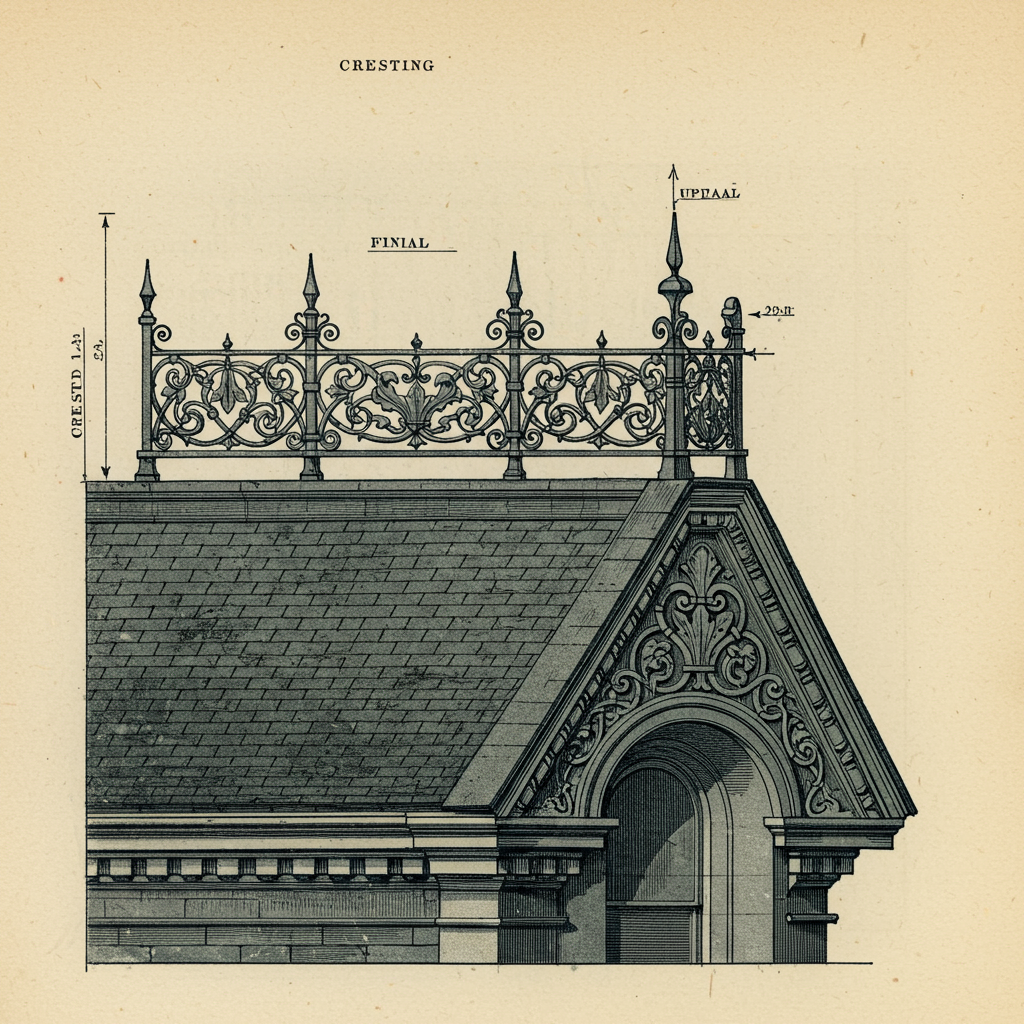
Decorative wrought-iron cresting along the flat upper deck of the mansard — a continuous lacy ridge with corner finials. The most theatrical and most fragile element of the Second Empire’s silhouette; and, by a wide margin, the most likely element to be missing on a surviving specimen, because rusting iron usually departs and is rarely replaced.
Come down to the body. The Second Empire body is, almost without exception, Italianate. A bracketed cornice runs along the line where the body meets the mansard; tall narrow windows in regular bays, often round-arched at the top, sit beneath hood molds; quoins ornament the corners; the walls are warm earth-tones; a bracketed front porch on chamfered wooden posts may run across the ground floor. (One could put a low hipped roof on this body and one would have an Italianate; remove that roof and replace it with a mansard, and one has a Second Empire.) The two styles are the same below the cornice and different above it. This is the deep fact about the Second Empire: it is an Italianate that has put on a Parisian hat.
Two more details round out the specimen. Many Second Empires carry a central pavilion — a section of the front elevation that projects slightly forward and rises half a storey higher than the rest, often with its own taller mansard above. The central pavilion is what makes a Second Empire townhouse read as monumental even at small scale: it concentrates the verticality of the building at the centre, in the manner of a French chateau. And on the most ornate examples, cast-iron balconies run across the front of the upper storeys, supported on fluted iron brackets, in patterns that one could order out of a foundry catalogue.
Assemble these — the mansard, the patterned slate, the dormers, the iron cresting, the Italianate body, the central pavilion, the cast-iron balconies — and one has a Second Empire. A four-bay urban townhouse carrying all of them is a high-style Second Empire dwelling; a country mansion with a single tall central mansard above an Italianate body is a Second Empire villa; a five-storey commercial block on a downtown street with a mansard above a brick Italianate elevation is the most common form of all in any American city that boomed in the 1870s.
The General Grant Style
The economic story behind the Second Empire is the story of post-war boom money meeting Parisian fashion meeting the federal building program of the Grant administration.
The Civil War had ended in 1865. The wartime economy had built railroads, foundries, shipyards, and a great deal of industrial wealth concentrated in the cities of the north; the post-war years, between 1865 and the Panic of 1873, saw an unprecedented expansion of American urban building. A new American merchant class — railroad magnates, dry-goods importers, manufacturers, war contractors — wanted houses that announced their wealth, and the existing Italianate vocabulary was no longer doing it. The Italianate had become the bourgeois fashion. What was wanted was a fashion that read imperial.
The Second Empire arrived as that fashion. It read Parisian. It read imperial. It cost more than the Italianate — slate roofing, ornamental ironwork, and the additional storey of mansard built it up — and that additional cost was a feature, because what one was buying was visible expense. The architecture caught on first in cities where wartime money had concentrated: Boston, New York, Philadelphia, Chicago, Cincinnati. By 1870 every prosperous American city had a Second Empire neighbourhood, and the style had moved decisively into the federal building program.
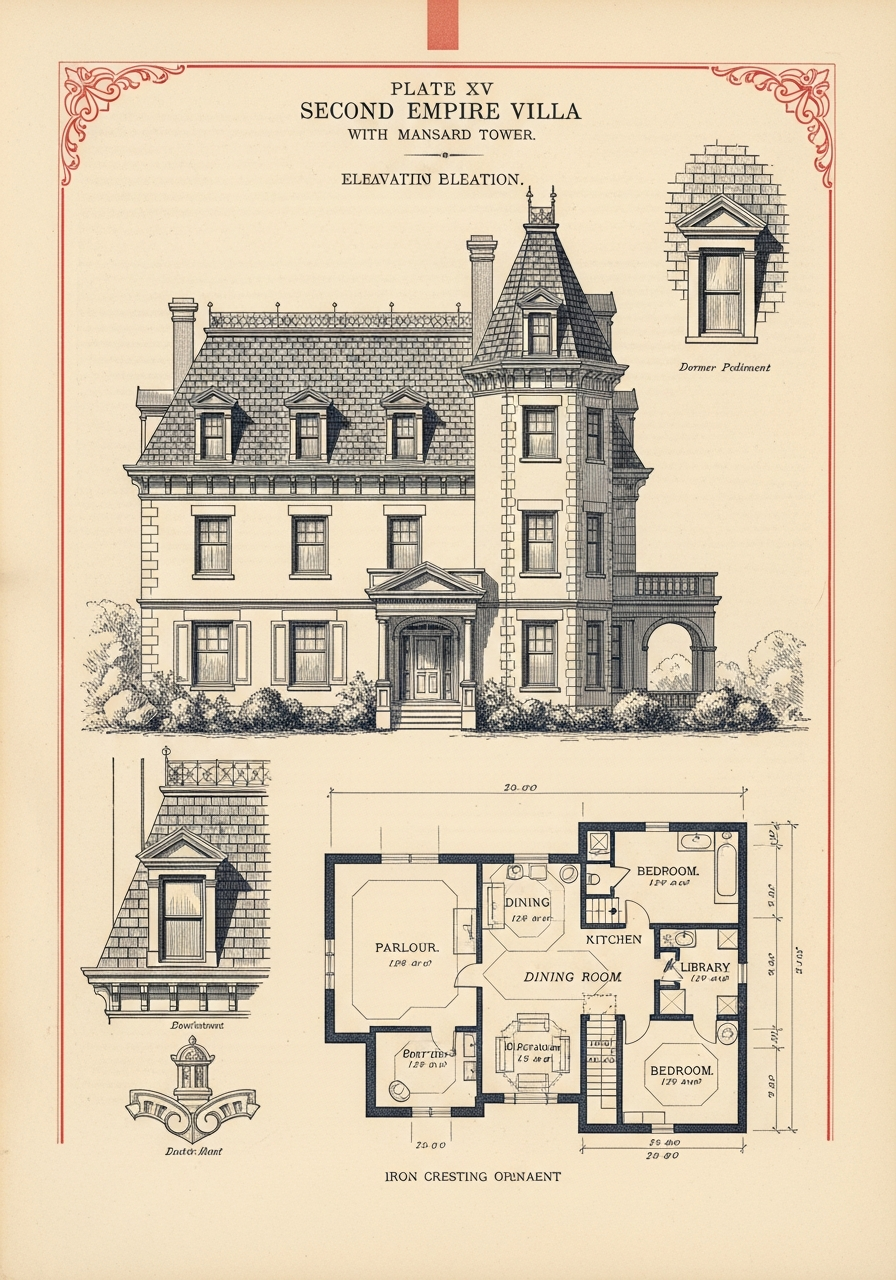
A plate from a 1870s American pattern-book — elevation and plan of a Second Empire villa with central pavilion and tall mansard tower. By 1870 most American Second Empires were being built from plates of this kind, drawn from European architectural journals and translated into American mill-catalogue parts. The slate, the ironwork, and the dormer pediments could all be ordered by mail.
The federal program is the most striking thing the style accomplished. Under President Ulysses S. Grant, the United States Treasury Department’s Office of the Supervising Architect, then under Alfred B. Mullett, undertook a building campaign on a scale the country had not seen before — post offices, customs houses, and federal courthouses in dozens of cities. Mullett, who had trained in Cincinnati and lived for a time in Paris, designed almost all of these in the Second Empire idiom. Between 1866 and 1874 the Treasury built something on the order of forty federal buildings in mansard-roofed Second Empire across the country, almost all in stone, on sites that had been chosen to anchor the architectural character of their cities. The State, War, and Navy Building in Washington (now the Eisenhower Executive Office Building) is the most extravagant of them; the smaller customs houses in Buffalo, Pittsburgh, and Saint Louis represent the typical scale; and the country was, for a few years in the early 1870s, putting up federal Second Empire buildings at a rate of roughly one per month.
This is why the style acquired, in the mouths of contemporaries, the nickname General Grant style. The association was personal — Grant was president while it was being built, and Mullett was his chief architect — and slightly derisive, because by the late 1870s the Grant administration had become a byword for political corruption, and the federal Second Empire was easy to mock as a corresponding architectural pretension. But the federal Second Empire was not, on inspection, corrupt. It was simply the style of its moment, deployed on the federal scale that had become possible after the Civil War, by an architect who had picked it up in Paris and applied it on government commissions for as long as the political weather permitted.
The Panic of 1873 — the financial crisis that followed the collapse of the Northern Pacific Railroad’s bonds and the failure of Jay Cooke’s banking house — ended the boom. By 1875 the Second Empire was being built at a quarter of its 1870 rate; by 1880 it was old-fashioned, and the Treasury department had moved on to a heavier Romanesque Revival under Mullett’s successors. The style had a fifteen-year mainstream arc, almost entirely concentrated in the post-war boom years and the federal building program. Most American Second Empires that one walks past today were put up between 1865 and 1875, and they survive in numbers that make them, from a distance, easy to mistake for Italianates.
What It Is Not
Four styles stand near enough to the Second Empire that the beginner confuses them with it, and distinguishing them is most of the work of reading the post-Civil-War American urban house.
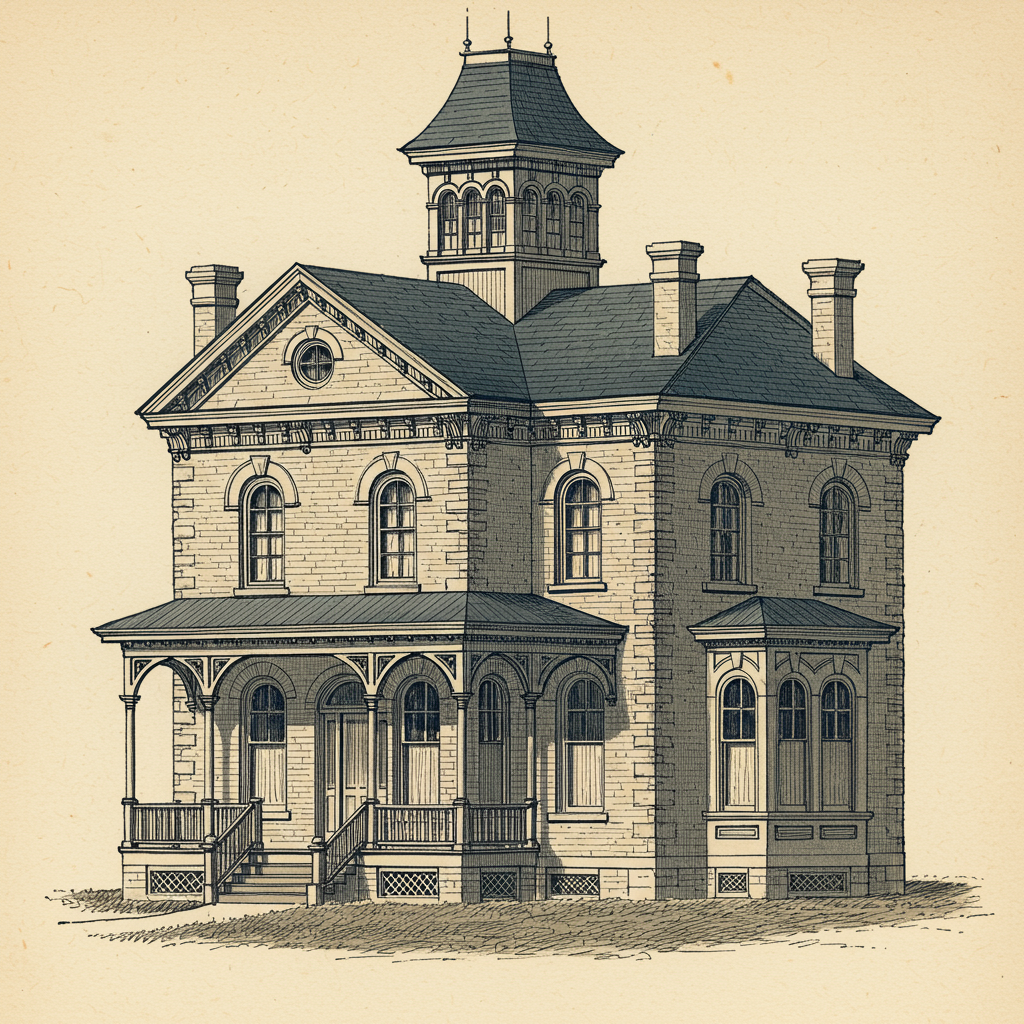
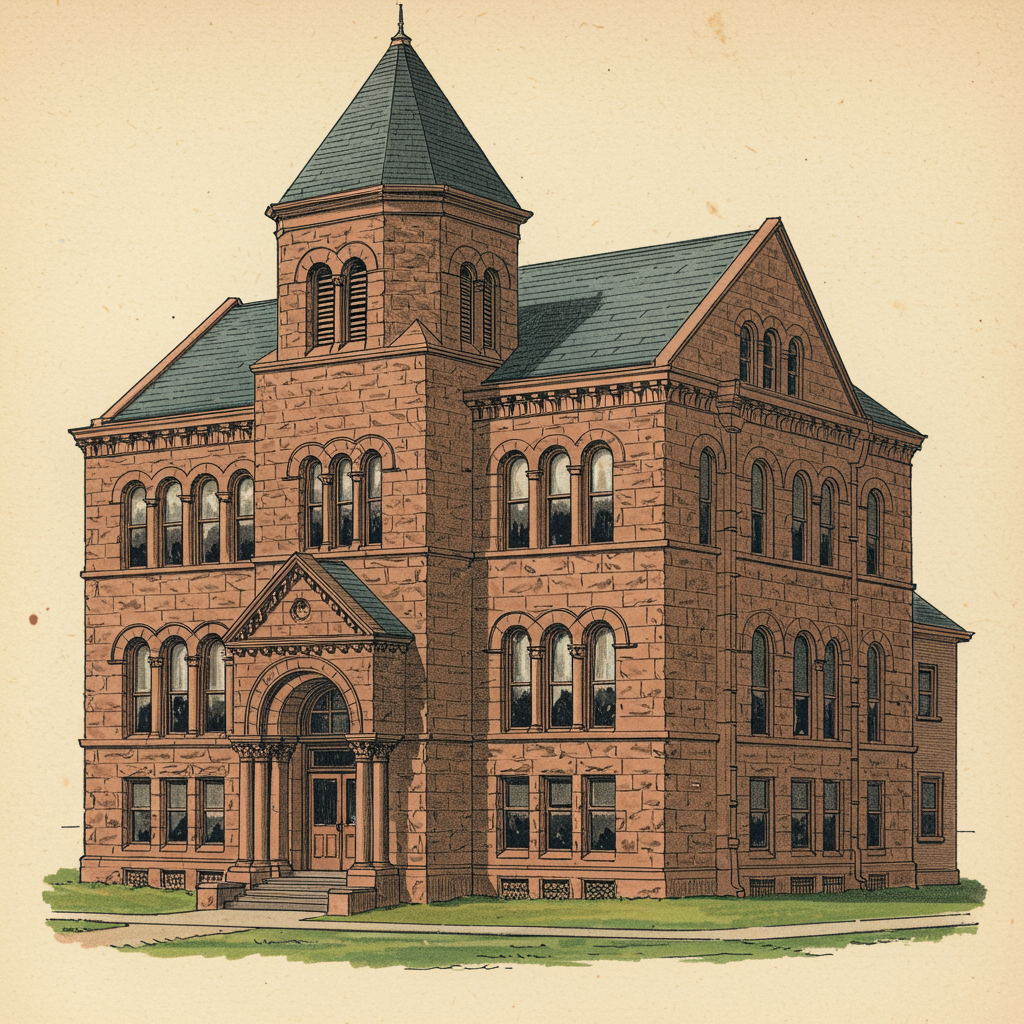
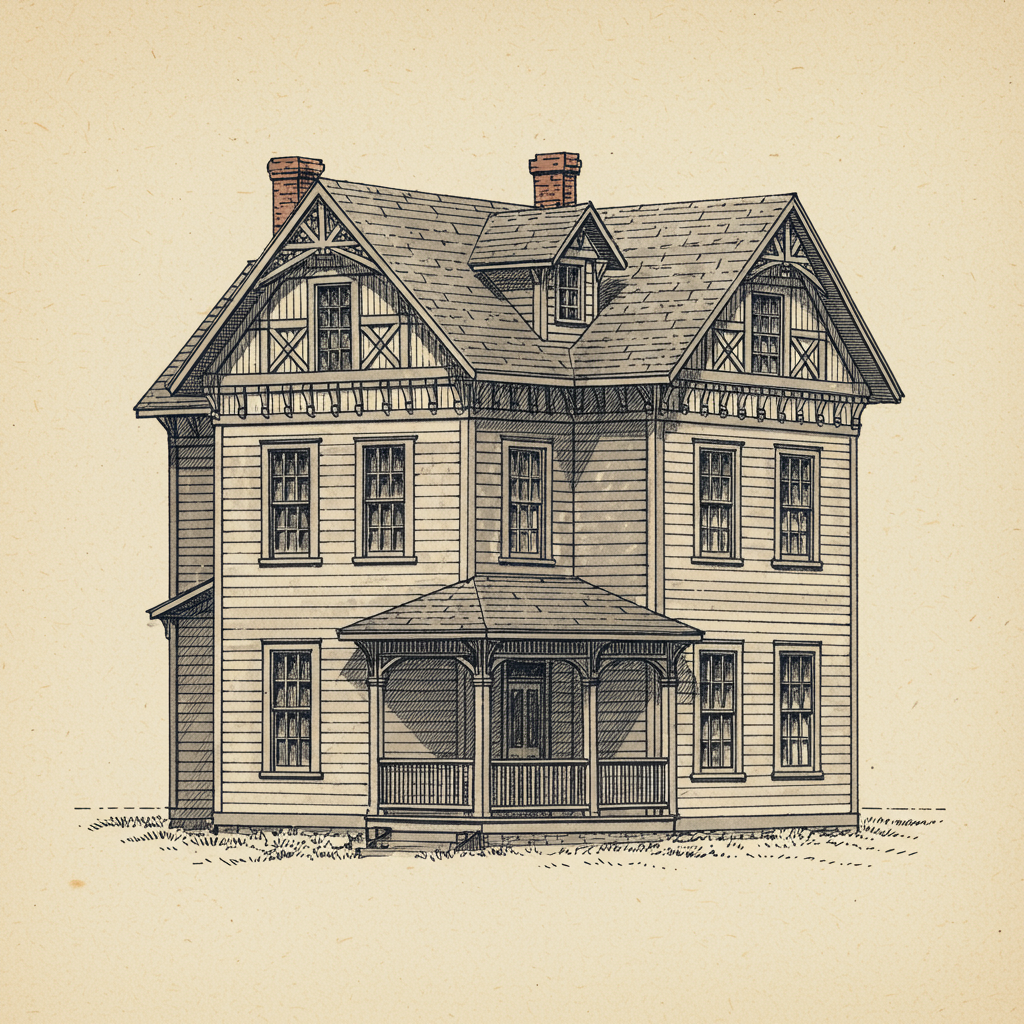
The Italianate — the Second Empire’s direct progenitor and underbody, examined in the previous post — shares everything with the Second Empire below the cornice line and almost nothing above it. A house with a low hipped roof and bracketed eaves is Italianate; the same house with a mansard roof above the bracketed cornice is a Second Empire. The two styles are not really alternative readings of the same house; they are the same body with different hats. (This is why so many actual surviving buildings of the 1860s and 1870s are hybrids — Italianates that have had a mansard added later, or Second Empires that have lost their mansard to fire and been re-roofed flat.)
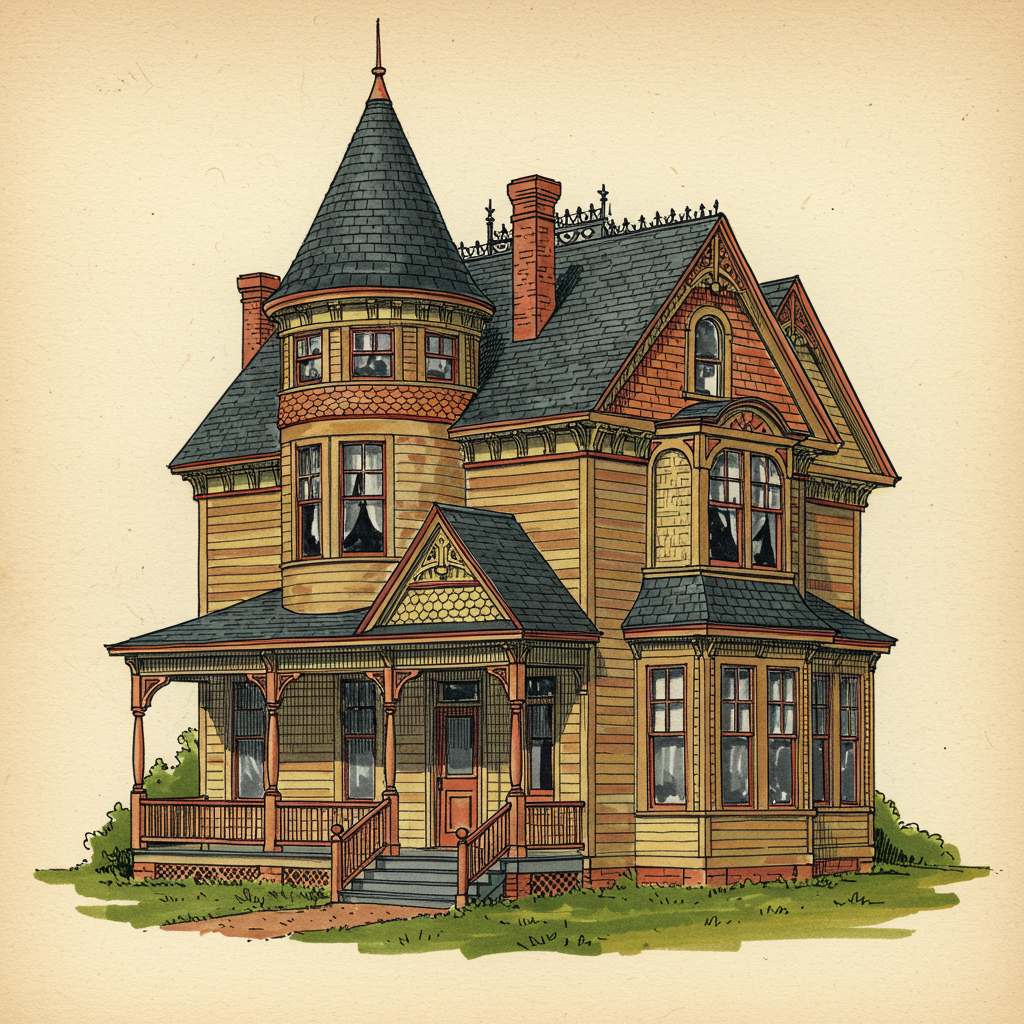
The Queen Anne — the late-Victorian style that displaced the Second Empire in fashion after about 1880, and the first style examined in this series — is the asymmetric, suburban, shingle-walled successor to the symmetric, urban, slate-roofed Second Empire. The Queen Anne also frequently carries a mansard somewhere on its complicated roofline, but on the Queen Anne the mansard is one element among many, on the Second Empire it is the element. If a roof is mostly mansard, the building is Second Empire; if a mansard is one of three or four roof shapes interacting on the same building, the building is Queen Anne.
The Romanesque Revival — the heavier urban masonry style that followed the Second Empire in commercial and institutional building — replaced the Second Empire’s slate-and-bracket vocabulary with rusticated stone, round Romanesque arches, and short heavy columns. A Romanesque Revival is the Second Empire’s serious masonry replacement; it is what the federal building program shifted to after the Treasury moved past Mullett. The visual distinction is unmistakable: the Second Empire is light, slated, and theatrical; the Romanesque Revival is heavy, stone, and grave.
The Stick style — the Second Empire’s wooden contemporary in the 1860s and 1870s — kept the asymmetric corner-tower massing that the Second Empire had popularised but replaced the imperial mansard and the bracketed cornice with applied wooden sticks expressing the frame of the house. A Stick is a wooden post-Italianate that has chosen austerity over imperial pretension. The two styles share builders and pattern-books and frequently appear on the same blocks of small-town American houses, and the rule of thumb is straightforward: if the silhouette is dominated by a mansard roof, the building is Second Empire; if the wall plane is dominated by exposed framing sticks, the building is Stick.
What It Was Trying to Say
The Second Empire flourished in America between roughly 1860 and 1885, with its sharpest period falling almost exactly between the end of the Civil War and the Panic of 1873. After 1875 it declined steadily — too expensive for a depression, too imperial for the sober years that followed, too associated with the Grant administration to survive the political reaction against it. By 1885 it was a residual style; by 1900 only its surviving buildings remained, and almost none were being put up new.
What it was trying to say is best taken, again, as the sum of two arguments running in parallel.
The first is the imperial argument. The American republic had emerged from the Civil War a major industrial and political power, and it spent the next decade and a half discovering that it had become one. The Second Empire was the architecture of that discovery. The mansard roof, the patterned slate, the iron cresting, the central pavilion — these were imperial silhouettes, drawn from contemporary Paris, deployed on American soil to assert that the United States was now the kind of country that built that way. The federal program made the assertion at the largest scale: post offices and customs houses in mansard, on the same model as Haussmann’s Paris, deployed to anchor the architectural character of every major American city. It was, on inspection, the first time the United States had built civic architecture intended to look imperial rather than republican, and the gesture is significant whether one approves of it or not.
The second is the prosperity argument. The Second Empire was visibly expensive — slate is more expensive than asphalt or wood; ironwork is more expensive than wooden trim; an additional habitable storey wrapped in mansard is more expensive than an attic — and that visible expense was the point. What the post-war American merchant class wanted was an architecture that announced their prosperity, and what the Second Empire offered was an architecture in which every visible material decision read expense. The patterned slate was a flag of expense. The wrought-iron cresting was a flag of expense. The mansard storey itself was a flag of expense. The architecture was a wealth display, and the wealth was real and recent, and the style was a near-perfect expression of the moment in which a republic of farmers became an empire of merchants.
What I find most telling about the Second Empire, taking these two arguments together, is its brevity. No other style in this series has had a fifteen-year mainstream arc. Greek Revival ran for nearly fifty years; Gothic Revival for forty; Italianate for forty-five; Queen Anne for twenty. The Second Empire was distinctive in being of its moment — tied so closely to the post-war boom and the Grant administration that when those ended, the style ended with them. Architecture is normally slower than politics; the Second Empire was an exception. It is the closest thing in the American style sequence to a political-historical period set in stone, and that — more than the silhouette, the slate, or the cresting — is what reading it teaches.
The next specimen I should like to take up is the Stick style — the Italianate’s wooden inheritor, which kept the asymmetric massing of the Second Empire but replaced its imperial mansard with the applied wooden sticks of an austere honest frame, and which spoke, after the financial collapse of the 1870s, in a quieter and more measured voice than its predecessors had managed.