The seven prior posts in this arc — Heriz, Tabriz, Caucasian Kazak, Bakshaish, Kashan, Bidjar, and most recently Hamadan — stayed, between them, within two weaving worlds: the Persian, in its workshop and village forms, and the Caucasian highland tradition that the Kazak post treated. Both of those worlds reach the collector through a settled population, a known town, and a foundation of cotton. Tekke belongs to neither. It opens a third world altogether — the Turkmen, the tribal weaving of the central Asian steppe and desert, woven by a people who until the close of the nineteenth century were not settled at all. This is the eighth post in Reading the Antique Rug, and it treats the Tekke in the position the arc has reserved for the opening of the Turkmen tradition.
It breaks the palette, and it breaks it harder than Hamadan did. Hamadan moved the arc from the dark wine-reds of the Kurdish country into rust and camel; Tekke moves it somewhere the Persian and Caucasian posts never went at all — into a field of deep madder-red shading toward madder-brown, a ground colour so dominant across an entire tribal production that a reader meeting a Tekke after a Hamadan registers the change as a change of country, which is precisely what it is. But colour, here as in the Hamadan post, is the thing one notices first and trusts last. What organises the Turkmen weavings is not the ground but the gül — the repeating quartered tribal medallion that runs in an all-over lattice across the field — and, more particularly, the system by which each Turkmen tribe carried its own gül and can be told from its neighbours by it. That gül system is the load-bearing collector distinction for the whole Turkmen tradition, and the post will carry it the way the Hamadan post carried the single weft.
The Specimen
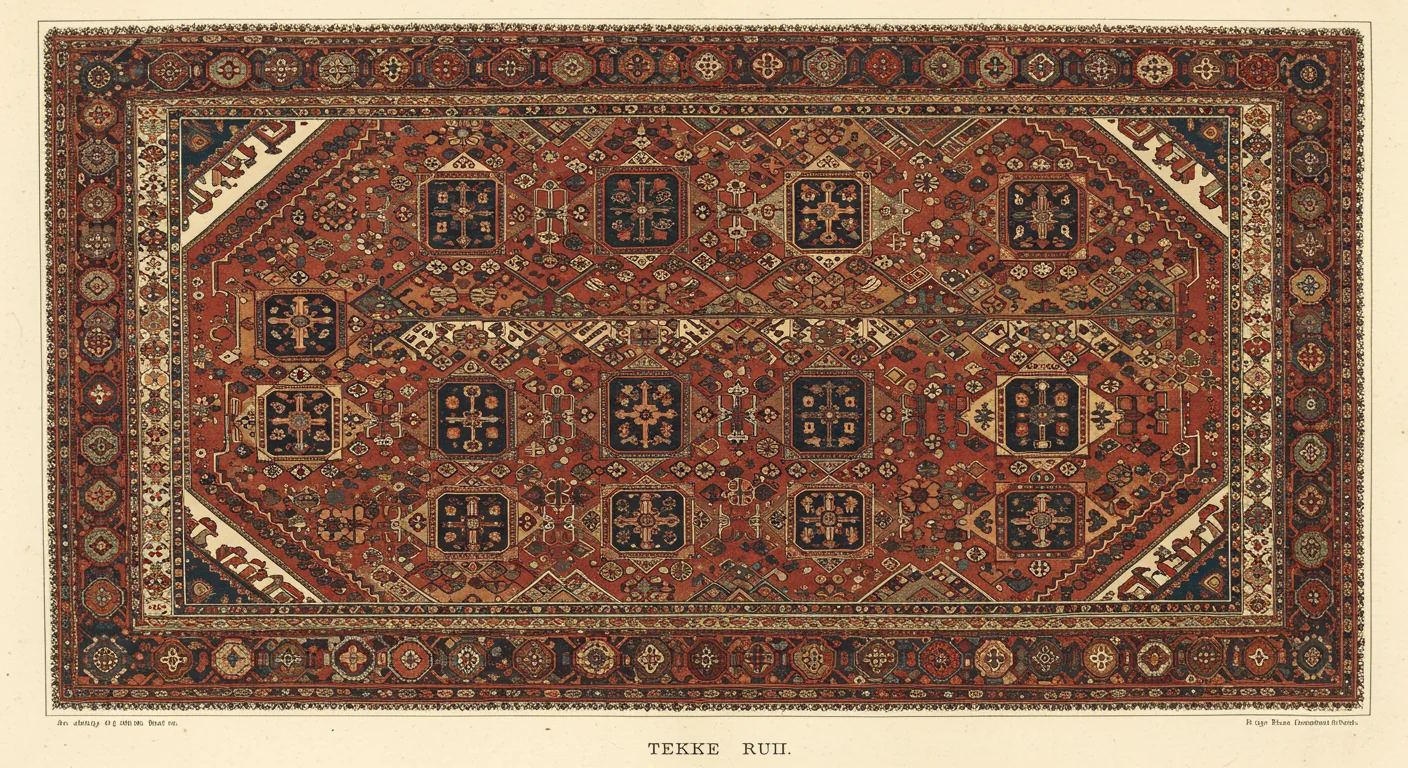
A Tekke that one will encounter is, in its commonest form, a piece of modest proportions — most main carpets run four to six feet in width and somewhat longer than that, the broad room-size carpet being a rarity in a tradition that wove for the tent rather than the hall. The first thing to settle, before any motif is read, is that there is no workshop anywhere in this account. The Tekke rug is a tribal rug from the first knot to the last; it was woven on a portable loom, by women of the tribe, to a vocabulary held in the memory and not drawn on a cartoon. The whole apparatus of the Persian posts — the city, the master designer, the commissioned carpet — is simply absent here, and the absence is the starting condition of everything that follows.
The composition is the signature, and it is uncommonly uniform. The Tekke field is covered, edge to edge, by a single repeating motif — the gül, the quartered tribal medallion — arranged in an offset lattice of rows, each gül linked to its neighbours by fine connecting lines so that the field reads as a single ordered net rather than as a scatter of separate ornaments. The Tekke gül is a flattened, gently lobed octagon, quartered by a cross into four compartments, each carrying a small stepped figure; the drawing is geometric, controlled, and repeated with a regularity that the tribal hand makes just irregular enough to be unmistakably hand-woven. Between the rows of primary güls sits a secondary, or minor, gül — a smaller motif, on the Tekke most often a starred or cruciform form. The primary gül and the minor gül together are the field; one does not, on a classic Tekke, find much else in it.
The palette is the deep madder register, and it is the colour the whole Turkmen tradition is known by and the colour this post introduces to the arc. The Tekke ground is madder-red carried toward madder-brown — a warm, dark, even mahogany, dyed from the madder root and aged into a colour with no Persian equivalent in the seven posts before this one. Against it the gül drawing is worked in ivory, in a darker brown-black, in a blue that the indigo gives sparingly, and in small quantities of a clear undyed white. The whole reads dark, warm, and disciplined. It does not read bright; the Tekke is not a rug of contrast, and a Turkmen weaving that announces itself in vivid reds and yellows is, on palette alone, pointing away from the Tekke and toward the lighter Yomut or the Ersari.
The Tekke wove, finally, in more forms than the carpet, and the forms belong in any honest specimen description because they are how most antique Tekke material actually survives. The household of the tent required furnishing, and the loom furnished it: the engsi, the door-rug hung across the entrance of the yurt, drawn to a quartered cross-panel design quite distinct from the gül field; the chuval and torba, the large and small tent-bags whose woven faces stored the household’s goods; the mafrash, the small storage bag; and the trappings woven for the wedding procession. A great deal of the finest Tekke weaving is found not in carpets at all but in these bag-faces and door-rugs, and a collector who looks only for the main carpet looks past most of the tradition.
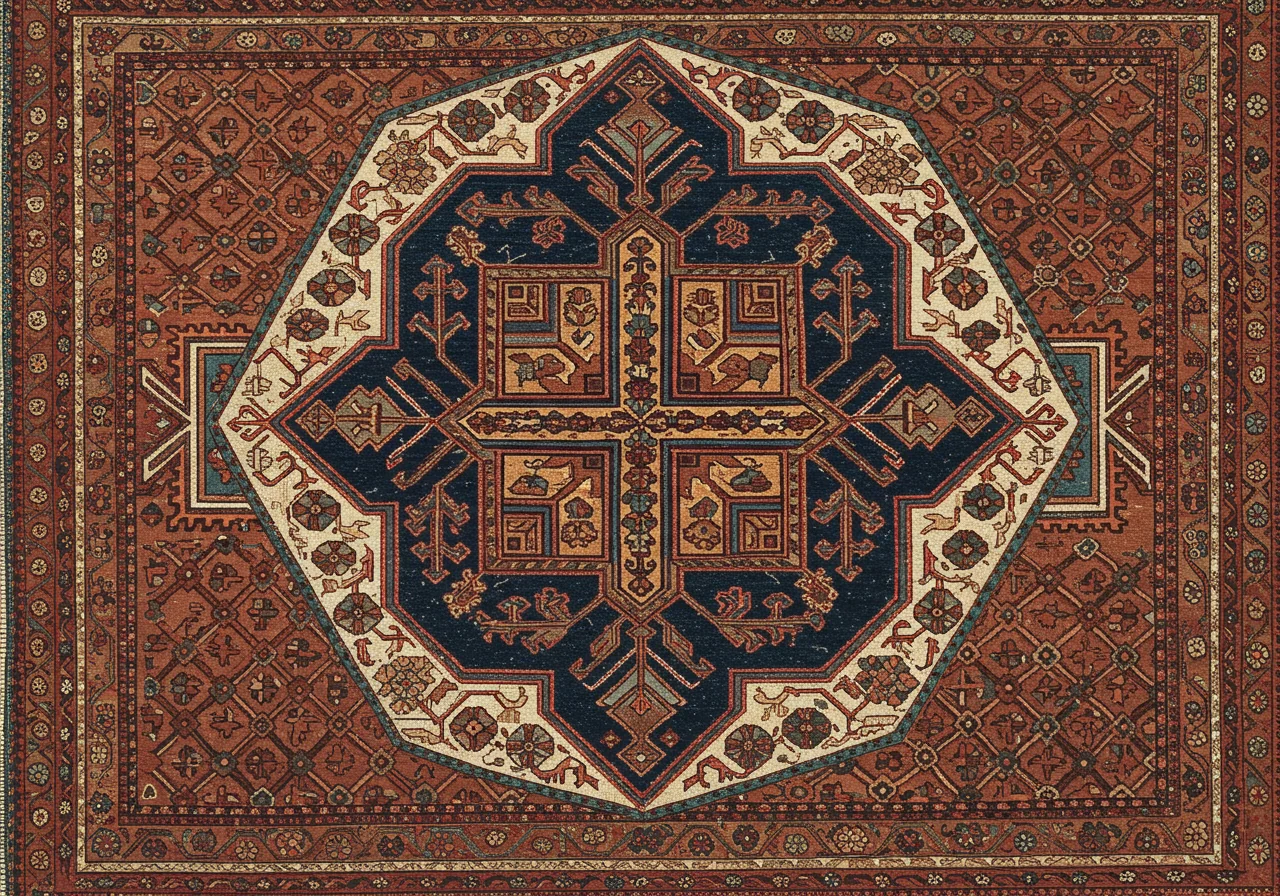
A close detail of the Tekke gül — the stepped octagonal medallion with the characteristic inner cross-and-quarter division that distinguishes the Tekke from the Salor, Yomut, and other Turkmen tribal güls. The drawing is tribal, the colour is the deep Tekke madder-brown.
The Evidence
The foundation is where the Turkmen tradition declares itself most plainly, and it is the first place the Tekke parts company with everything the arc has treated so far. The Persian rugs of the prior posts — Heriz, Tabriz, Kashan, Bidjar, Hamadan — are built on a foundation of cotton: cotton warp, cotton weft, the settled crop of a settled agriculture. The Tekke is built on wool. Warp and weft alike are wool, spun from the fleece of the tribe’s own flocks, and the all-wool foundation is not an incidental fact but a structural signature of the entire Turkmen production. It is the foundation of a pastoral people who carried their wealth on the hoof and had no cotton field to draw on; and it places the Tekke, structurally, with the Caucasian highland weavings of the Kazak post rather than with any Persian rug. When one turns a Turkmen rug over and finds wool against the hand where a Persian rug would give cotton, one has already learnt something true about where it was made.
The knot is the asymmetric knot — the open knot, tied around one warp and passing loosely behind the other — used across the Tekke production and across most of the Turkmen tribes, though the Yomut complicates that statement and the post will return to it. Density on the Tekke runs high by tribal standards: the better antique pieces sit between roughly a hundred and twenty and a hundred and eighty knots to the square inch, and the very finest Tekke work — certain engsis and bag-faces in particular — climbs well past that, into a fineness that few tribal traditions anywhere have matched. This is worth dwelling on, because the Tekke confounds an easy assumption. One expects, from the Hamadan post, that tribal weaving is coarse weaving. The Tekke is not coarse. It is a tribal rug woven to a workshop’s fineness, and the fineness was achieved without any workshop at all — by a tradition of weavers who had carried the same vocabulary, and the same standards, across generations.
The dye is the deep madder, and the madder is the second pillar of the evidence. The colour the Tekke weaver wanted from the madder root was not a bright red but a dark, saturated, brown-shaded red — the mahogany ground that gives the tradition its character. A genuine antique Tekke red has a depth and a faint variegation across the field that the chemical reds of the later commercial period flatten out; the abrash of a hand-dyed madder ground is part of the evidence, not a flaw in it. The wool itself rewards the hand: the Turkmen flocks of the Trans-Caspian country gave a fleece long in the staple and high in lanolin, and a well-kept antique Tekke has a sheen and a soft, dense resilience under the palm that the knot count alone would not predict — the wool doing, here as elsewhere, work that no diagram of the structure can record.
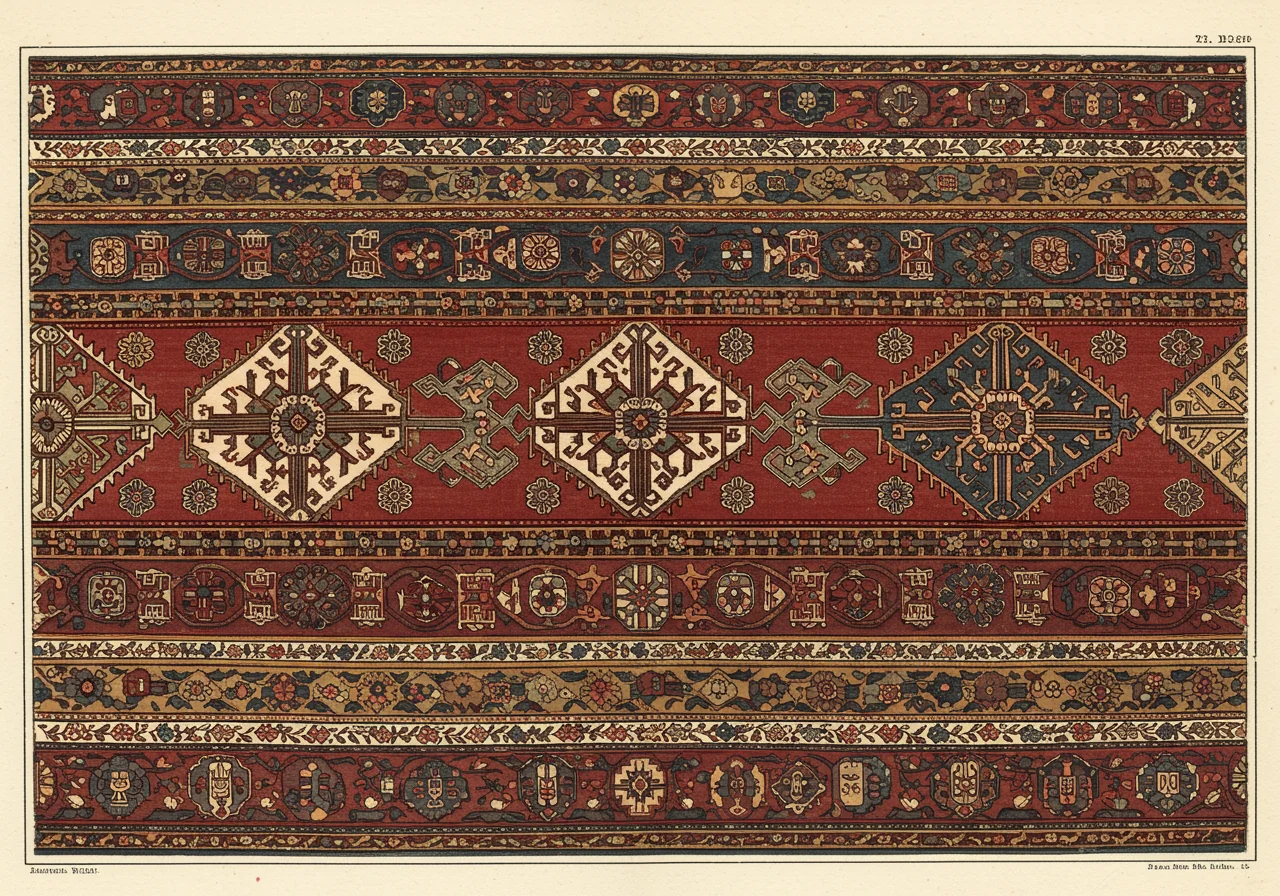
A close detail of a Tekke main border — the kepse or qotchak repeat in the Turkmen tribal register, drawn with the tribal-hand irregularity that distinguishes a Turkmen border from a Persian workshop border.
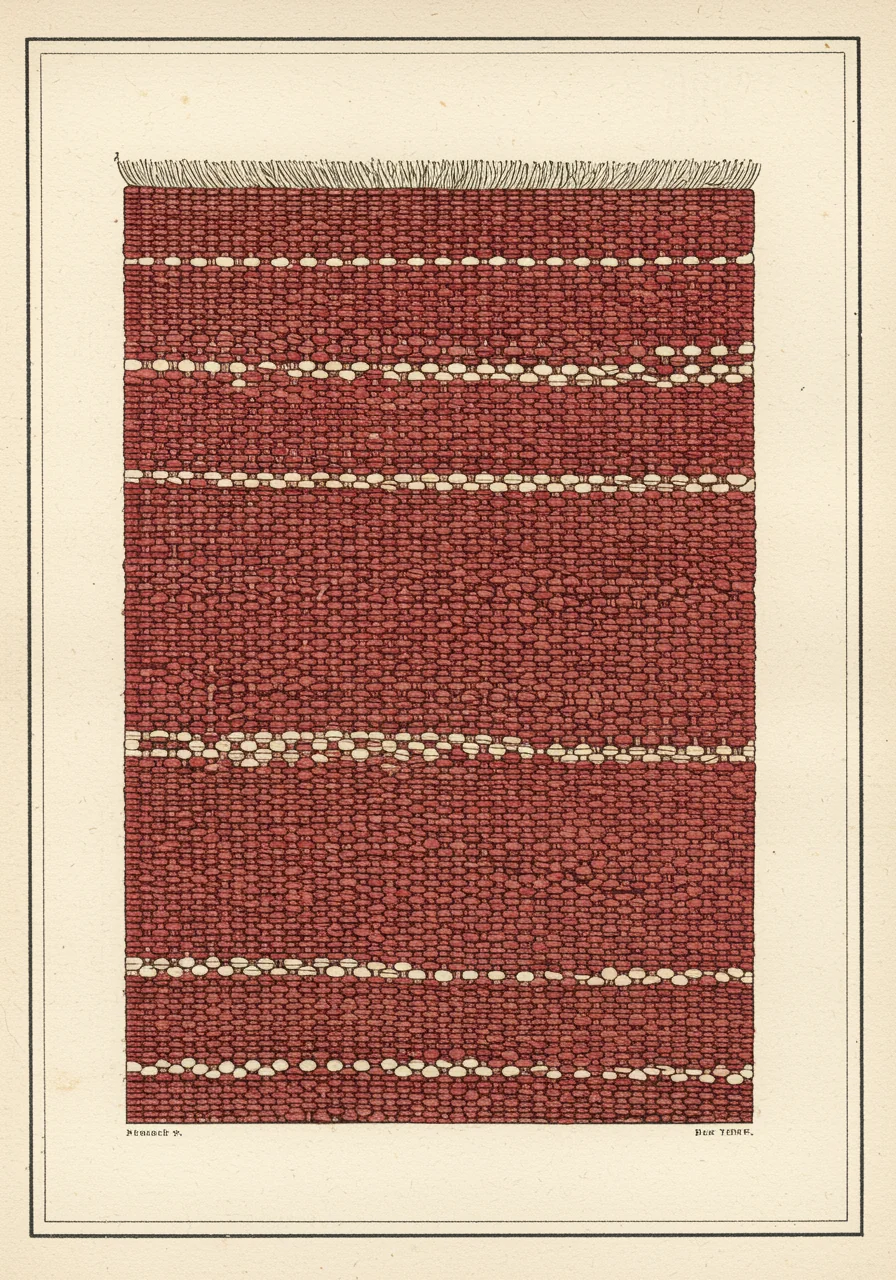
A close detail of the back of a Tekke rug — the wool warp and wool weft (the Turkmen foundation, distinct from the Persian cotton warp), the asymmetric knot at tribal density.
The Period
The Turkmen were, for the whole of the period that produced the rugs this post is concerned with, a tribal people of the Trans-Caspian country — the desert and oasis belt east of the Caspian Sea that is now the republic of Turkmenistan. They were not subjects of any settled state. They were pastoral, mobile, organised by tribe and clan rather than by city, and they lived along the oases of a hard country in which water and pasture, not land as such, were the wealth worth holding. The Tekke were one tribe among several — the others being the Salor, the Yomut, the Saryk, the Chodor, the Ersari — and for most of the eighteenth century they were not the dominant one.
The dominant tribe, in the older order, was the Salor. The Salor held the prestige of the Turkmen world; theirs was the apex weaving tradition, and the other tribes deferred to them in a manner the rugs themselves record. That order began to give way in the early nineteenth century. Through the 1820s and the 1830s the Tekke rose, pressed upon the Salor, and started — for it was the beginning of a process measured in decades, not the work of a single season — to erode their pre-eminence; the rise carried on across the 1840s and 1850s, and only by the third quarter of the century, with the Tekke holding the great oases of Merv and the Akhal, was the displacement complete. The Salor were scattered and reduced, and — this is the part that matters for the weaving — their tradition did not vanish so much as it was absorbed. The Tekke took up Salor motifs, Salor standards of fineness, the very gül in modified form; the rise of the Tekke is, in the history of the rugs, the eclipse of one tribal weaving by another that had learnt from it. The relationship between Tekke and Salor is the central story of the Turkmen tradition, and it is the reason the antecedent of this post is a Salor rug.
The autonomy of the Turkmen ended in a single battle. Through the middle of the nineteenth century the Russian empire pressed south across the steppe; the Tekke resisted it longer and harder than most, and in 1881 the resistance was broken at Geok Tepe, where the Russian army stormed the Tekke fortress with a slaughter that ended Turkmen independence for good. What followed for the rugs was the pattern the Hamadan post has already described in its Persian form: the commercial export trade arrived, demand from Russia and the West intensified, and a tribal weaving made for the tent began to be made for the market. The deep madder gave way, in the commercial production, to brighter and cheaper dyes; the disciplined old vocabulary loosened; and the engsi and the tent-bag, no longer needed by a tribe being settled out of its tents, became trade goods rather than household furniture. Soviet workshop production carried the names forward into the twentieth century, but the tribal Tekke — the rug woven by the tribe for itself, in madder, to the old standard — belongs to the period before 1881, and it is that rug the collector is reading for.
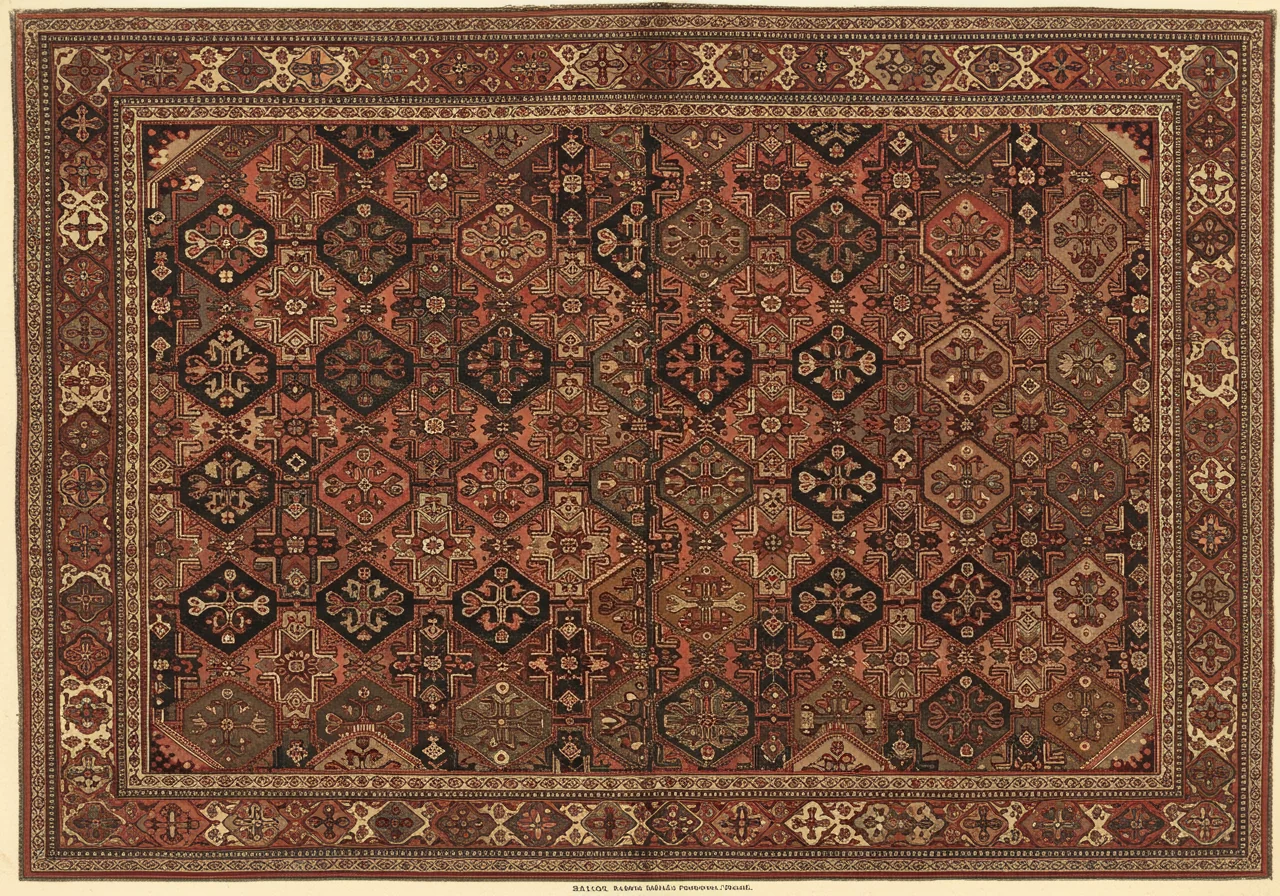
A pre-1830 Salor tribal rug — the older Turkmen apex tradition before the Tekke displacement that began in the 1830s. The Salor was the dominant Turkmen tribe and produced the finest tribal weavings; the Tekke eclipsed the Salor and absorbed their weaving tradition. The relationship between Tekke and Salor is the principal Turkmen-tribal story.
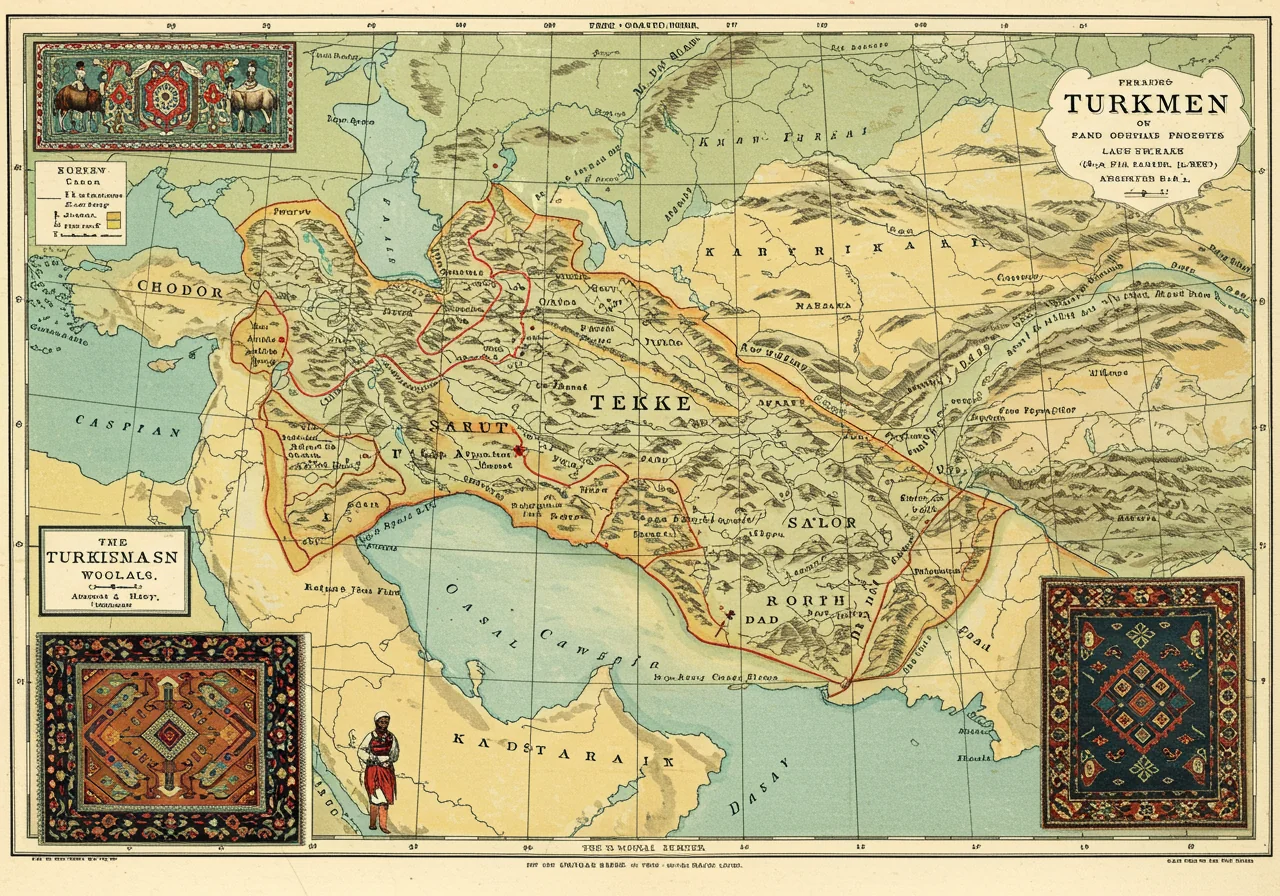
A page from a Victorian connoisseur’s portfolio on the Turkmen tribes — Trans-Caspian map locating Tekke, Salor, Yomud, Saryk, Chodor, Ersari territories; archetype gül drawings showing the distinguishing inner-division of each tribe’s principal medallion.
What It Is Not
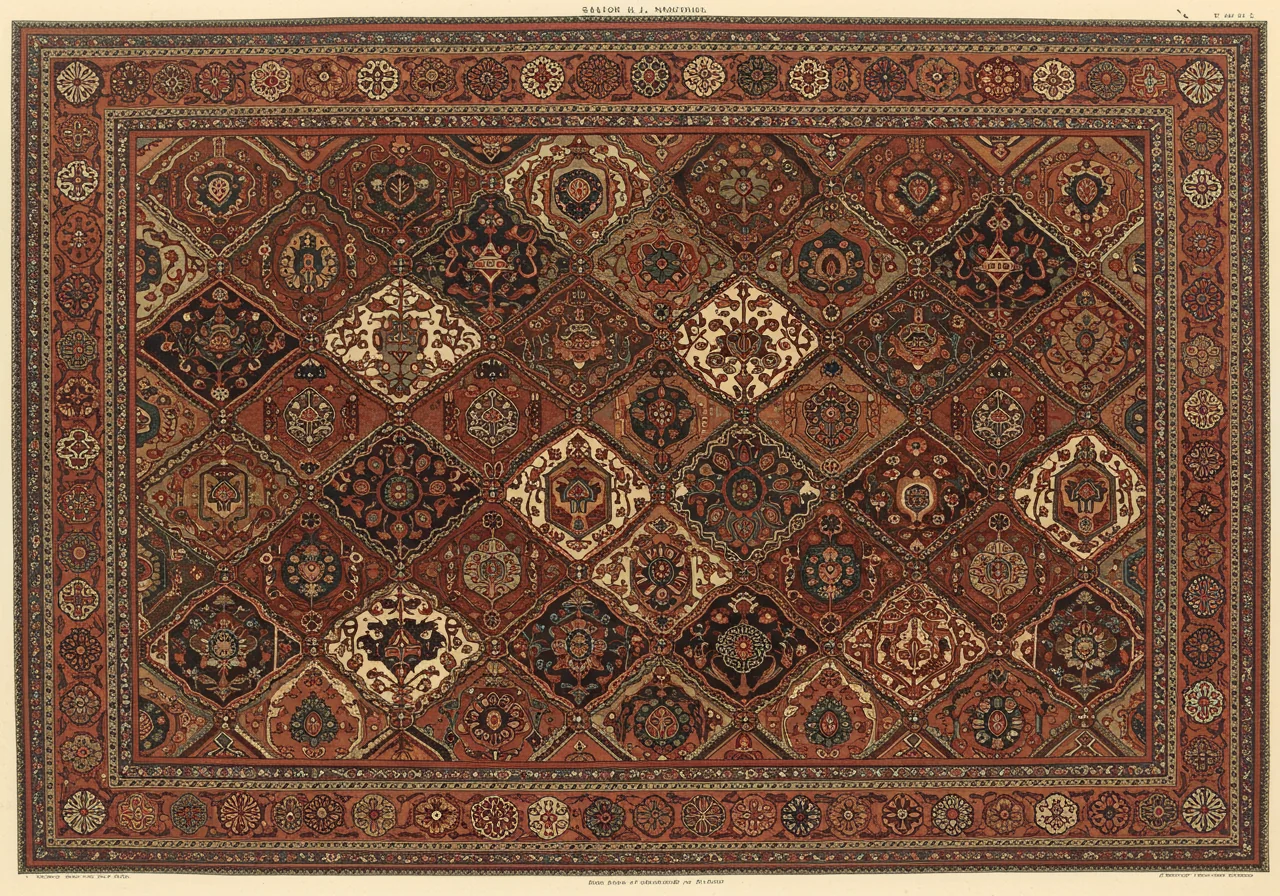
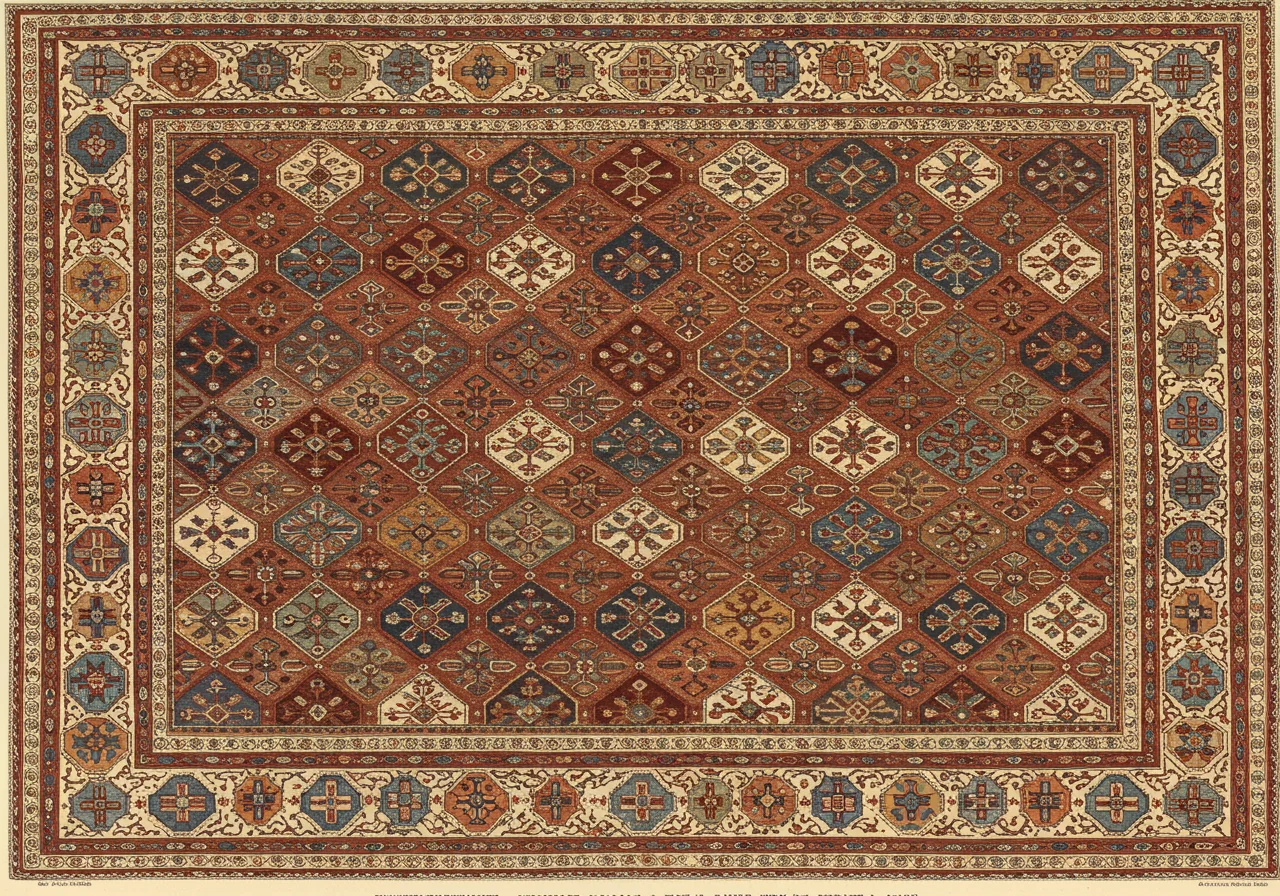
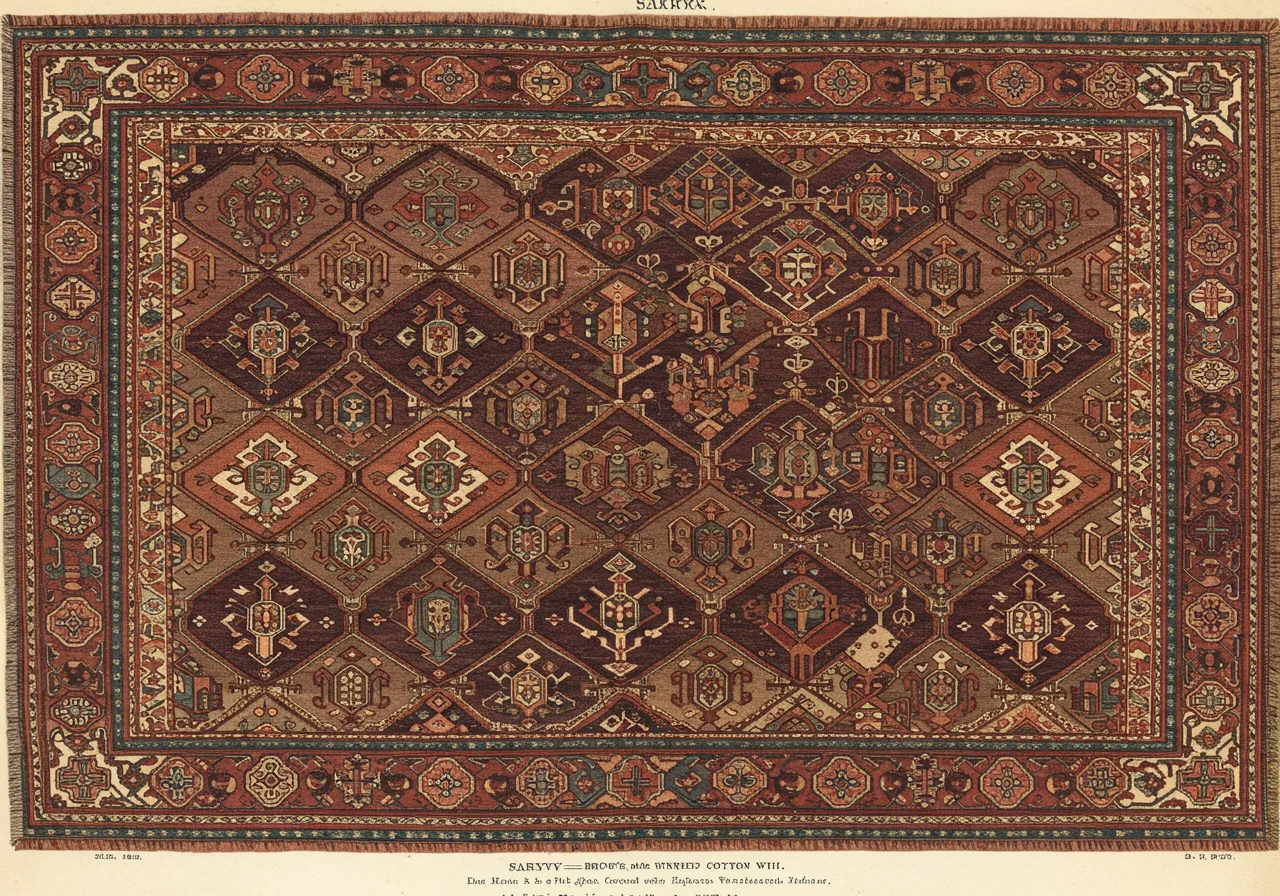
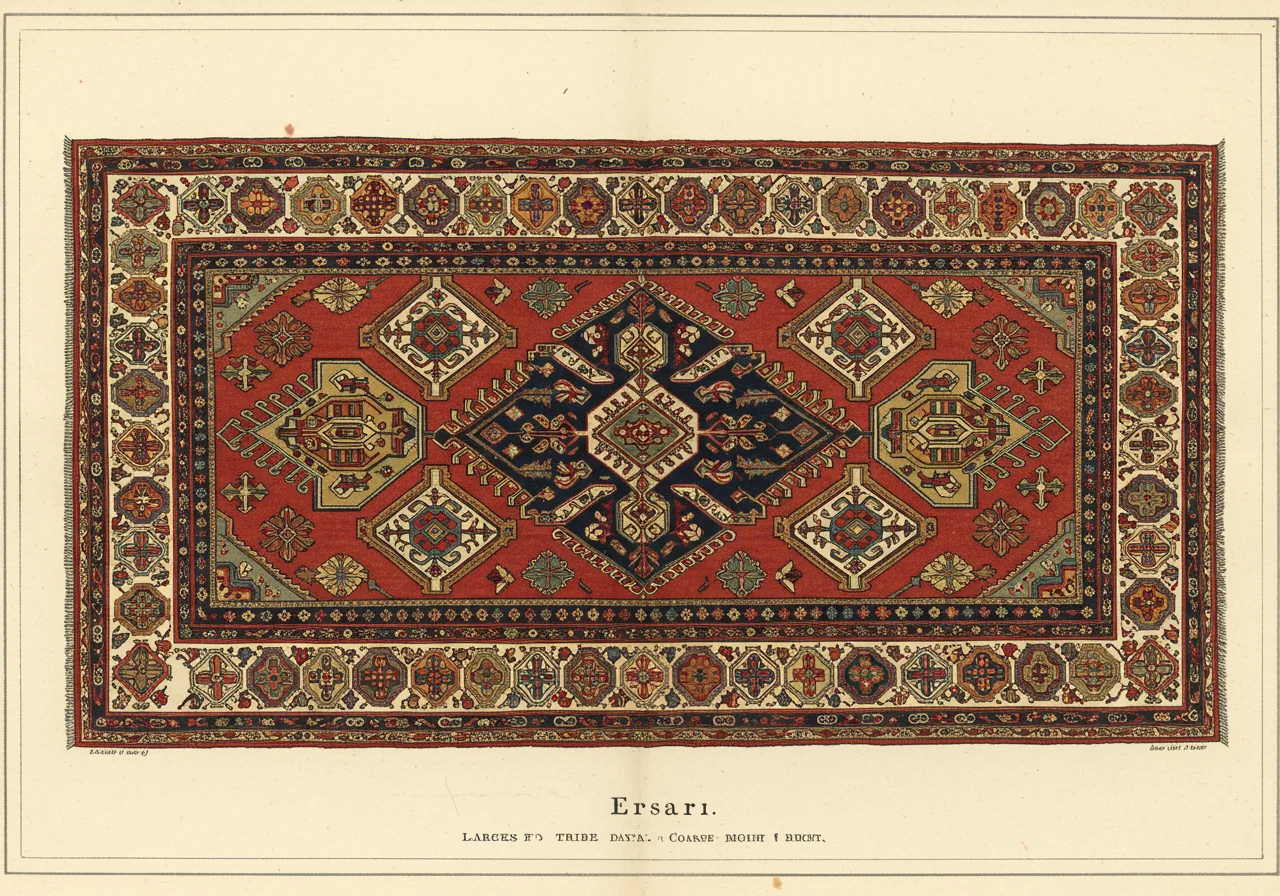
Before the four siblings are taken in turn, one trade-name has to be dealt with, because it stood for a century between the Western buyer and the truth of these rugs. The Turkmen weavings were sold in the West, all through the nineteenth century and well into the twentieth, as Bokhara rugs — and the better Tekke pieces as Royal Bokhara. The name was a merchant’s name, and it named the wrong thing entirely. Bukhara was the great market city of central Asia, the entrepôt through which the tribal rugs of the region were carried, sorted, and shipped onward; it was emphatically not the place of weaving. No Turkmen tribe lived there. The Tekke wove in the Akhal oases and at Merv, hundreds of miles from the city whose name their rugs were sold under, and the gül that the trade called the “Royal Bokhara gül” was simply the Tekke gül seen by a market that had been told the city and not the tribe. The lesson is the same one the Hamadan post drew from the label “Mosul”: the dealer’s word records the route, not the loom. A rug catalogued as a “Royal Bokhara” in an old sale record is, almost without exception, a Tekke.
That settled, the four siblings divide by the principle that organises this entire post — the gül. Each Turkmen tribe carried its own primary gül and its own minor gül, and the practised eye reads the pair of them to attribute a Turkmen weaving to its tribe before it reads anything else. This is the load-bearing skill of Turkmen collecting, and it is worth stating as plainly as the single-weft test was stated for Hamadan: with a Turkmen rug, one identifies the tribe by reading the güls.
A Salor is the displaced apex tribe, the antecedent of this very post, and the Salor gül is the one closest to the Tekke’s — which is no accident, since the Tekke absorbed it. The Salor primary gül, however, is drawn with a finer hand and a distinct interior division that the trained eye separates from the Tekke’s, and Salor weaving carries, on its finest pieces, small areas of magenta silk worked into the pile — a luxury the Tekke production did not run to. The rule of thumb: the gül that looks like a Tekke gül but is drawn finer and lit here and there with silk is a Salor.
A Yomut is the eastern and western Turkmen tribe, and it is the easiest of the four to separate, because the Yomut did not weave the Tekke kind of field at all. The Yomut carried several güls, the kepse and the dyrnak among them, drawn as serrated diamond or hooked forms quite unlike the lobed Tekke octagon, and the Yomut palette runs lighter and more varied, with more blue and a brick-toned red. The Yomut also used the symmetric knot on much of its production, where the Tekke used the asymmetric. The rule of thumb: a Turkmen rug with serrated diamond güls, a lighter and bluer palette, and frequently a symmetric knot is a Yomut.
A Saryk is the tribe of the Merv oasis before the Tekke took it — the Saryk and the Tekke contested the same ground, and the Tekke displaced the Saryk there as they displaced the Salor elsewhere. The Saryk gül is its own form, and the Saryk palette characteristically runs a darker, more purplish or brown-toned red than the Tekke’s clear madder, often with white worked in cotton rather than wool. The rule of thumb: a Turkmen rug whose red has gone toward brown-purple, with cotton highlights and a distinct primary gül, is a Saryk.
An Ersari is the largest of the Turkmen tribes and the one settled furthest south, along the Amu Darya — and it is the loosest fit of the four. Ersari weaving is coarser than the Tekke, larger in scale, more varied in its design vocabulary, and brighter in palette, frequently carrying a clear red and even yellow that the Tekke madder never approaches. The rule of thumb: a Turkmen rug that is big, coarse, brightly coloured, and various in its design is an Ersari, and the Tekke’s dark, fine, disciplined gül field is its opposite.
The pattern across all four is the working value of the post. One does not attribute a Turkmen rug by its size, nor by the fact of its being red, nor by the bare presence of repeating medallions — all of the tribes share those. One attributes it by reading the primary and minor gül together against the tribe’s palette and knot.
What One Looks At
The practical discipline of identifying a Tekke comes down, as in the prior rug posts, to a short ordered checklist — and as the Hamadan post began with the move that does the most work, so this one begins with the move that does the most work for a Turkmen rug. That move is to read the gül.
One looks first, and principally, at the gül. Having established — by the all-wool foundation and the repeating medallion field — that a rug is Turkmen at all, the whole question of the tribe turns on the primary gül and the minor gül read together. The Tekke primary gül is the flattened, gently lobed octagon, quartered by a cross into four small stepped compartments, linked into an offset lattice by fine connecting lines; the Tekke minor gül is the smaller starred or cruciform figure set between the primary rows. A rug whose güls are serrated diamonds points to the Yomut; a gül lit with silk and drawn finer points to the Salor; a brown-purple ground with cotton white points to the Saryk; a large, coarse, brightly drawn gül points to the Ersari. The gül is the attribution. Everything else on this list confirms it or qualifies it.
One looks next at the foundation. One turns the rug over, and one expects wool — wool warp and wool weft, the pastoral foundation of the Turkmen tradition. A cotton foundation argues, hard, against any tribal Turkmen attribution and points toward a later commercial or workshop piece woven to the names. The knot, on the Tekke, is the asymmetric knot, and the better antique pieces run fine. Tribal weaving here does not mean coarse weaving, and a Tekke that is also notably fine is behaving exactly as a good Tekke should.
One looks at the palette. The Tekke ground is the deep madder-red carried toward mahogany-brown — dark, warm, saturated, faintly variegated with the abrash of a hand-dyed field. A Turkmen rug that reads bright, that runs to clear reds and yellows, or that has gone brown-purple in the ground, is on palette alone pointing away from the Tekke. The dark even madder is the Tekke’s, and the chemical brightness of the later commercial production is the surest sign that one is not holding the tribal rug.
And one looks, last, at the form. The Tekke wove the main carpet, but it also wove the engsi, the chuval and torba, the mafrash and the wedding trappings, and a great deal of the finest surviving Tekke material is in these smaller formats rather than in carpets. A narrow piece with a quartered cross-panel design is very likely an engsi; a single woven panel, finished along three sides and plain along the fourth, is the face of a tent-bag. To recognise the form is to recognise the tribal household the rug furnished — and the household is, finally, the thing the whole post has been reading toward. The Tekke rug is not a workshop’s product nor a village’s. It is the furniture of a tent, and the gül in the field is the name of the tribe that wove it.
The next post in the rug arc will be either Hereke — to open the Anatolian court tradition with its multicolor silk palette and 19th-c Ottoman court-workshop register — or Salor, to extend the Turkmen tradition into the pre-Tekke apex. The choice will depend on what photographic material is available at the time of writing.